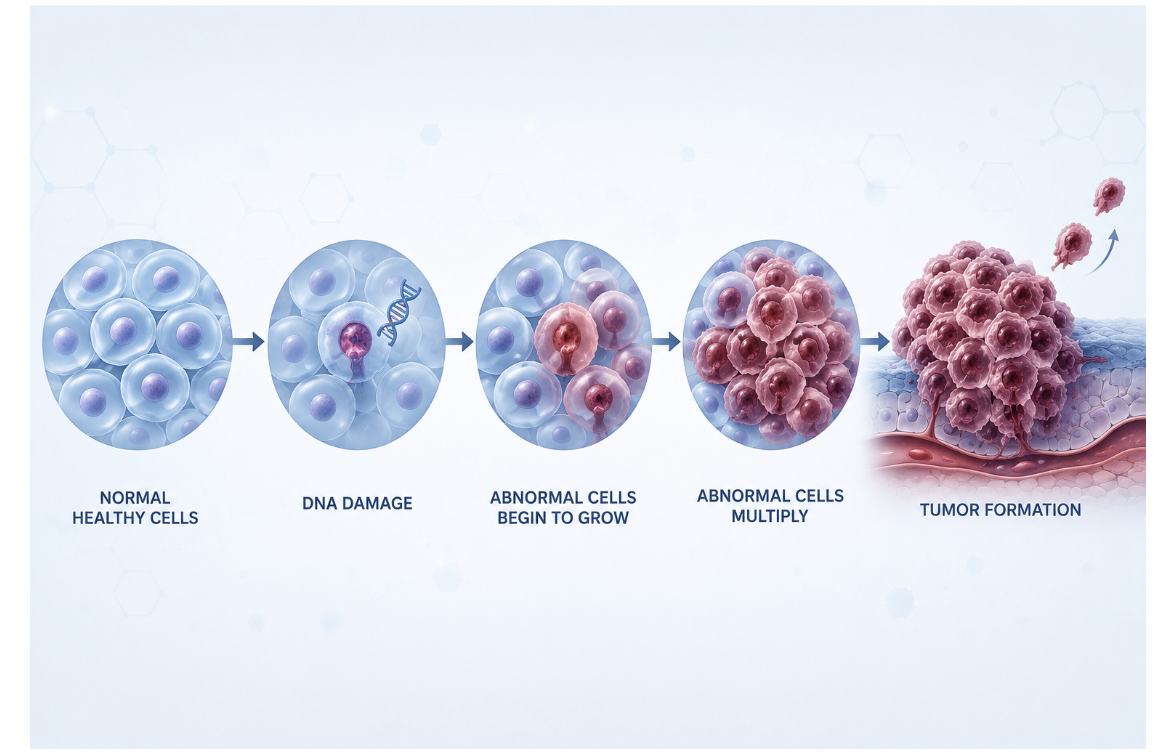
How Cancer Develops: From Healthy Cells to Abnormal Growth
Cancer is often thought of as a disease that appears suddenly, but in reality, it usually develops gradually over time. The process often begins long before any symptoms are noticed, which is one of the reasons why preventive healthcare and early detection play such an important role in improving outcomes.
Understanding how cancer develops can help individuals make informed decisions about their health and recognize the importance of routine screenings and regular medical care.
What Is Cancer?
Your body is made up of trillions of cells that grow, divide, and die in a highly organized way. Every day, old or damaged cells are replaced with healthy new ones to keep your body functioning properly.
Cancer begins when this normal process breaks down. Instead of stopping their growth or dying when they should, abnormal cells continue to multiply uncontrollably. Over time, these cells can accumulate and form a mass called a tumor. However, not all cancers form solid tumors. For example, blood cancers such as leukemia affect the blood and bone marrow rather than forming a distinct lump.
How Does Cancer Develop?
Cancer develops through changes in a cell's DNA, known as genetic mutations. DNA contains the instructions that tell cells when to grow, divide, repair themselves, and die.
Most DNA damage is either repaired by the body or causes the affected cell to die naturally. In some cases, however, mutations remain. If these mutations affect genes that control cell growth, the abnormal cells may continue multiplying instead of following the body's normal regulatory processes.
As additional mutations accumulate over time, these abnormal cells may become increasingly different from healthy cells and may eventually develop into cancer.
This process often takes many years, which is why cancer risk generally increases with age.
What Can Increase the Risk of Cancer?
While cancer can develop in anyone, certain factors may increase an individual's risk of developing the disease. Some risk factors can be modified, while others cannot.
Common risk factors include:
- Increasing age
- Family history of certain cancers
- Inherited genetic mutations
- Tobacco use
- Excessive exposure to ultraviolet (UV) radiation
- Heavy alcohol consumption
- Overweight and obesity
- Physical inactivity
- Certain viral or bacterial infections
- Exposure to some environmental or occupational substances
Having one or more risk factors does not necessarily mean a person will develop cancer. Likewise, some individuals diagnosed with cancer have no identifiable risk factors.
Why Doesn't Cancer Always Cause Symptoms?
One of the challenges of cancer is that it often develops silently during its earliest stages.
Small groups of abnormal cells may not interfere with normal body function or cause noticeable symptoms. Many cancers are only discovered after they have grown larger or spread to nearby tissues.
This is why many people feel completely healthy while cancer is developing.
Why Early Detection Matters
Because some cancers develop without symptoms, routine screening plays an important role in preventive healthcare.
Depending on an individual's age, family history, medical history, and overall risk profile, healthcare providers may recommend various screening tests designed to identify certain cancers before symptoms develop or at an earlier stage, when treatment may be more effective.
Not every cancer has an established screening test, and screening recommendations vary from person to person. Discussing your individual risk factors with a qualified healthcare provider can help determine which screening options may be appropriate for you.
The Bottom Line
Cancer is a complex disease that usually develops gradually as abnormal cells accumulate genetic changes over time. Although this process often occurs without noticeable symptoms, understanding how cancer develops highlights the importance of preventive healthcare, healthy lifestyle choices, and appropriate screening.
Staying informed, maintaining regular health assessments, and discussing your personal risk factors with your healthcare provider can help support early detection and informed healthcare decisions.