Understanding BMI: What It Can and Can't Tell You About Your Health
Body Mass Index (BMI) is one of the most commonly used tools to assess whether a person's weight falls within a healthy range. You may have seen your BMI calculated during a medical appointment or come across it in a health assessment.
While BMI can provide useful information about overall health risk, it is important to understand that it is only one piece of the bigger picture. It cannot measure body composition or determine an individual's overall health on its own.
What Is BMI?
Body Mass Index (BMI) is a calculation that estimates whether your weight is appropriate for your height.
It is calculated using your height and weight and places adults into general categories that help estimate the risk of certain health conditions.
For most adults:
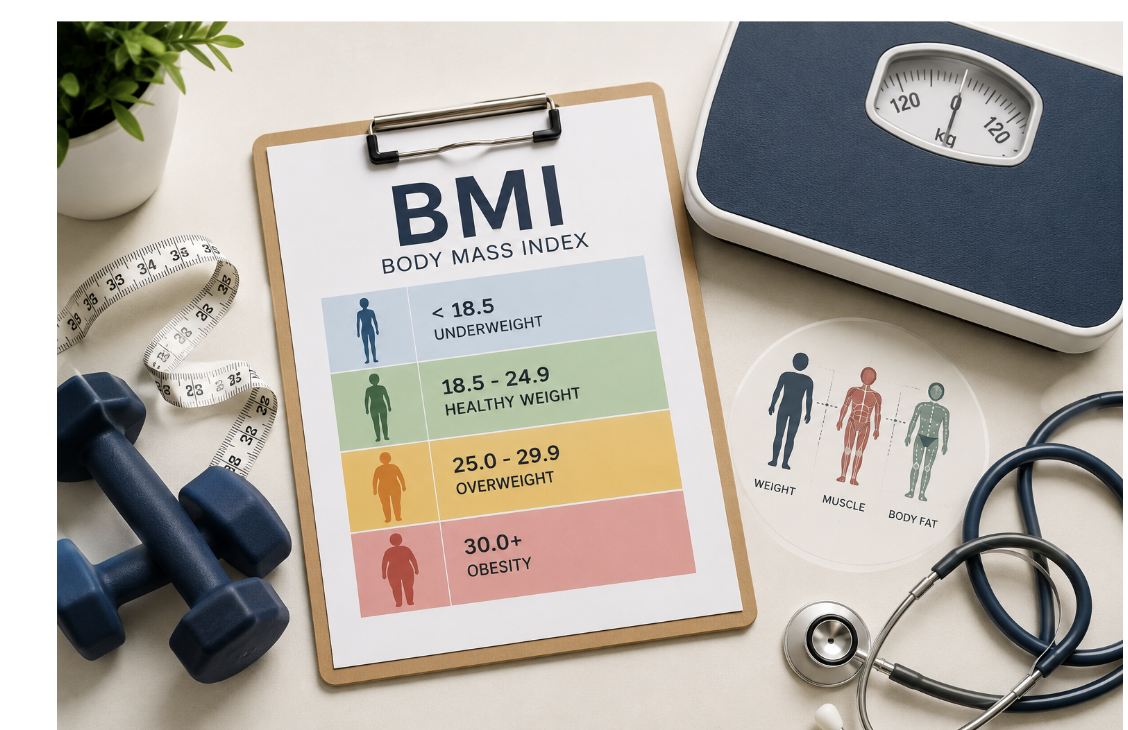
- Underweight: BMI below 18.5
- Healthy weight: BMI 18.5–24.9
- Overweight: BMI 25.0–29.9
- Obesity: BMI 30.0 or higher
These categories are intended to identify potential health risks rather than diagnose a medical condition.
Why Is BMI Used?
BMI is a simple screening tool that helps healthcare providers identify individuals who may have an increased risk of conditions such as:
- Heart disease
- High blood pressure
- Type 2 diabetes
- High cholesterol
- Sleep apnea
- Certain types of cancer
Research has shown that, on average, health risks tend to increase as BMI moves further outside the healthy range.
What Doesn't BMI Tell You?
Although BMI is useful, it has important limitations.
Because it only considers height and weight, BMI does not measure:
- Body fat percentage
- Muscle mass
- Bone density
- Fat distribution
- Overall fitness level
For example, an athlete with significant muscle mass may have a BMI in the overweight range despite having very little body fat. Similarly, someone with a BMI in the healthy range may still have excess abdominal fat or other health risk factors.
This is why BMI should always be interpreted alongside other health information.
Why Overall Health Matters
Healthcare providers often consider many factors in addition to BMI, including:
- Blood pressure
- Cholesterol levels
- Blood sugar
- Family history
- Physical activity
- Diet
- Smoking status
- Waist circumference
Together, these factors provide a more complete picture of an individual's overall health and future risk of disease.
Should You Be Concerned About Your BMI?
A BMI outside the healthy range does not automatically mean you are unhealthy, just as a healthy BMI does not guarantee perfect health.
Instead, BMI serves as a starting point for discussing your overall health and whether additional assessment may be appropriate.
If your BMI is elevated, small, sustainable lifestyle changes—including regular physical activity, balanced nutrition, adequate sleep, and smoking cessation if applicable—can have meaningful benefits for long-term health.
The Bottom Line
BMI is a useful screening tool that helps estimate health risk, but it does not tell the whole story. Your overall health depends on many factors, including body composition, lifestyle habits, family history, and other medical measurements. Rather than focusing on BMI alone, it's most valuable to consider it as one part of a comprehensive approach to understanding and maintaining your long-term health.