Understanding Your Preventive Blood Panel: What Your Results Can Reveal About Your Health
Blood tests are one of the most valuable tools in preventive healthcare. While many people think of bloodwork as something ordered only when they are sick, a comprehensive blood panel can provide important insights into your overall health, even when you feel perfectly well.
By evaluating a variety of biomarkers, preventive blood testing may help identify early signs of disease, monitor important body functions, and reveal risk factors before symptoms develop.
Understanding what these tests measure can help you better appreciate the role bloodwork plays in protecting your long-term health.
Why Is Preventive Bloodwork Important?
Many common health conditions develop gradually and may not cause noticeable symptoms in their earliest stages.
High cholesterol, diabetes, liver disease, kidney disease, and chronic inflammation can all progress silently for years.
Routine blood testing provides a snapshot of how your body is functioning and may identify abnormalities that deserve further evaluation by your healthcare provider.
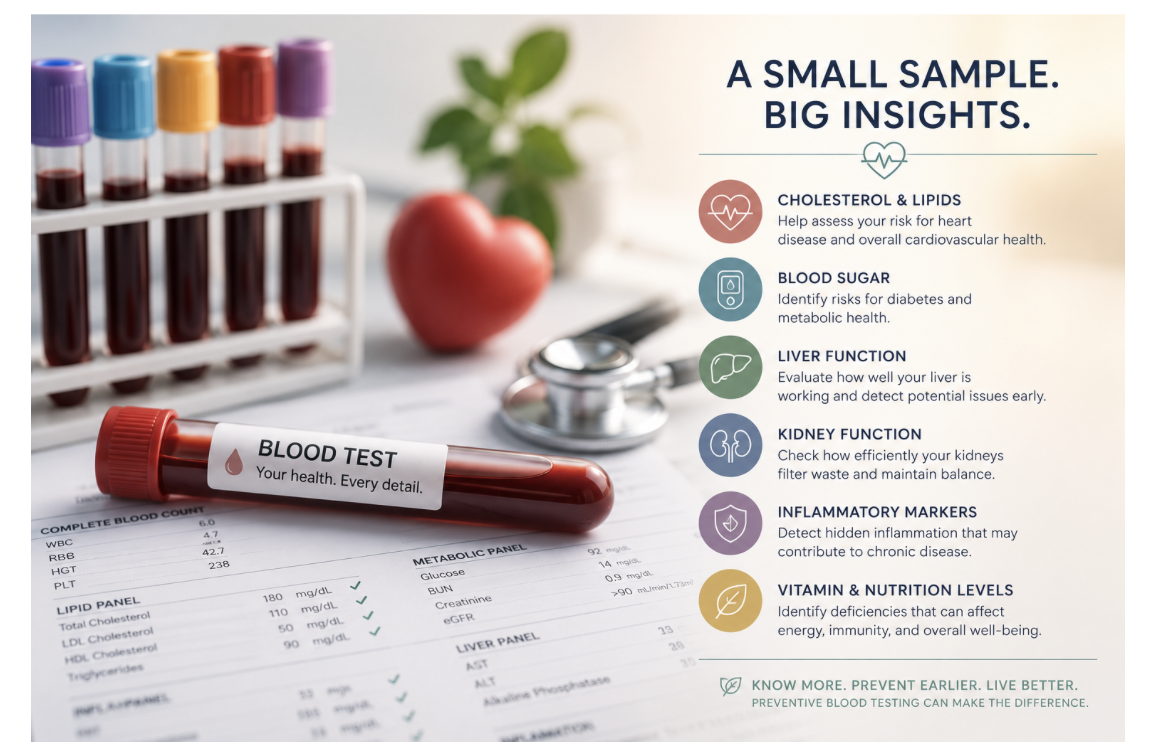
Cholesterol and Blood Lipids
A cholesterol panel evaluates several different types of fats circulating in your bloodstream.
These commonly include:
- Total cholesterol
- Low-density lipoprotein (LDL) cholesterol
- High-density lipoprotein (HDL) cholesterol
- Triglycerides
Each plays a different role in cardiovascular health.
Elevated LDL cholesterol and triglycerides may contribute to plaque buildup inside the arteries over time, while HDL cholesterol helps transport excess cholesterol away from the bloodstream.
Looking at the complete lipid profile provides a more comprehensive assessment than focusing on a single cholesterol number alone.
Blood Sugar
Blood glucose testing measures the amount of sugar circulating in your bloodstream.
Abnormal blood sugar levels may indicate prediabetes or diabetes, conditions that often develop gradually without obvious symptoms.
Over time, persistently elevated blood sugar can affect the heart, kidneys, eyes, nerves, and blood vessels.
Early identification allows individuals to work with their healthcare providers on lifestyle modifications or treatment when appropriate.
Liver Function
Your liver performs hundreds of essential functions, including processing nutrients, producing proteins, metabolizing medications, and filtering toxins from the blood.
A preventive blood panel may include liver enzymes and other markers that help evaluate liver health.
Abnormal results do not necessarily indicate serious disease, but they may suggest inflammation, fatty liver disease, medication effects, or other conditions that require further assessment.
Kidney Function
Healthy kidneys continuously filter waste products and excess fluid from the bloodstream.
Blood tests commonly evaluate markers such as creatinine and estimated kidney function (eGFR), which help determine how effectively the kidneys are working.
Kidney disease often develops gradually and may not cause symptoms until it has progressed significantly, making routine monitoring especially valuable for individuals with risk factors such as diabetes or high blood pressure.
Inflammatory Markers
Inflammation is the body's natural response to injury or infection. However, chronic low-grade inflammation has been associated with several long-term health conditions, including cardiovascular disease.
Certain blood tests, such as C-reactive protein (CRP), may provide information about inflammation occurring within the body.
While inflammatory markers cannot diagnose a specific disease on their own, they may provide additional information when interpreted alongside other clinical findings.
Vitamin Levels
Certain vitamin deficiencies may develop gradually and contribute to fatigue, weakness, impaired immune function, or other health concerns.
Depending on an individual's medical history and risk factors, bloodwork may evaluate vitamins such as vitamin D or vitamin B12.
Identifying deficiencies allows healthcare providers to recommend appropriate dietary changes or supplementation when needed.
Looking at the Whole Picture
Each blood test provides one piece of information, but the greatest value comes from interpreting all of the results together.
Healthcare providers consider bloodwork alongside your:
- Age
- Medical history
- Family history
- Lifestyle
- Current medications
- Other screening results
This comprehensive approach provides a clearer understanding of your overall health and helps determine whether additional evaluation may be appropriate.
The Bottom Line
A preventive blood panel offers much more than routine laboratory values. It provides valuable insight into your cardiovascular health, metabolism, liver and kidney function, inflammation, and nutritional status, even before symptoms appear.
At Vitara Logistiques, comprehensive preventive blood testing is part of a personalized health assessment designed to provide a more complete picture of your overall health. Combined with advanced imaging and cardiac screening when appropriate, these evaluations help support informed healthcare decisions and proactive preventive care.