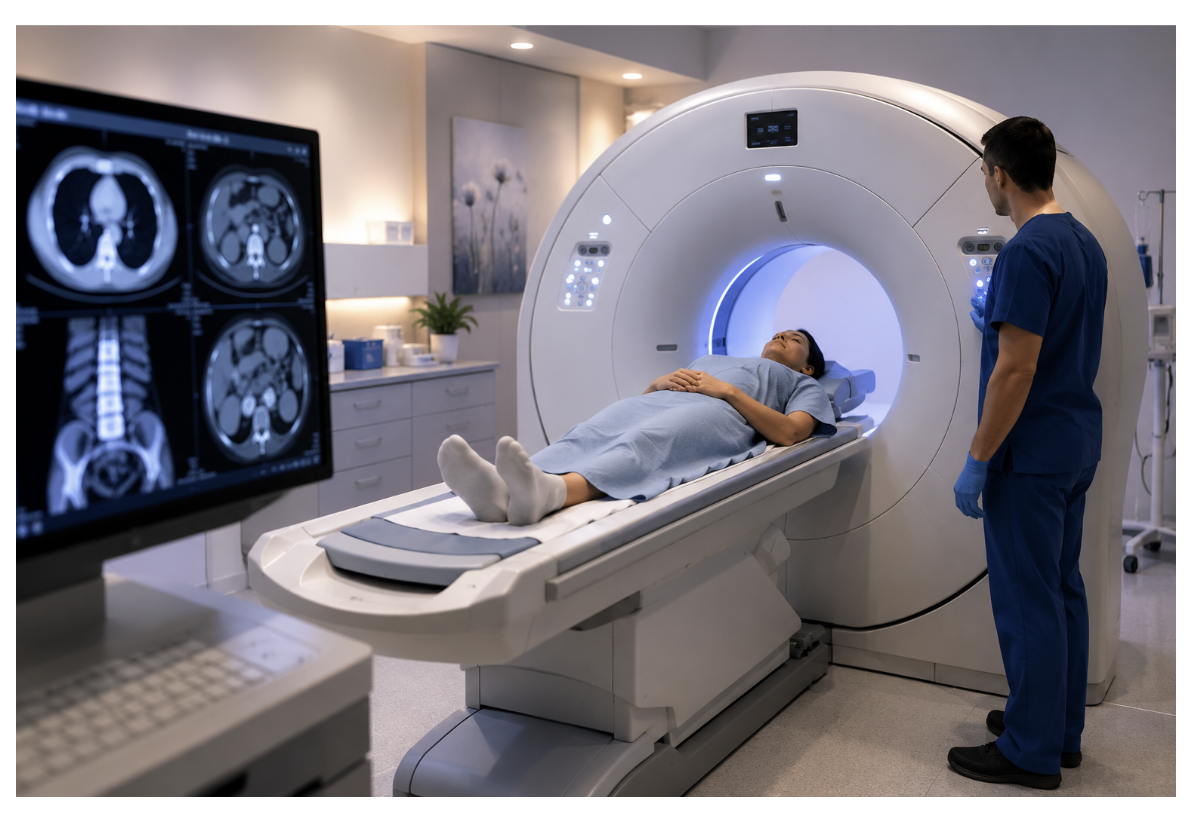
What Can a CT Scan Detect?
A computed tomography (CT) scan is one of the most valuable diagnostic imaging tools used in modern medicine. It allows healthcare providers to see detailed cross-sectional images of the body's internal structures, helping identify conditions that may not be visible with a standard X-ray.
CT scans are fast, highly detailed, and used to evaluate many different organs and medical conditions. In some cases, they can detect abnormalities before symptoms become noticeable, making them an important part of diagnostic and preventive healthcare.
What Is a CT Scan?
A CT scan combines multiple X-ray images taken from different angles to create detailed, three-dimensional images of the body's internal organs, bones, blood vessels, and soft tissues.
Unlike a regular X-ray, which produces a single flat image, CT technology provides much greater detail, allowing physicians to examine structures layer by layer.
The procedure is painless and typically takes only a few minutes to complete.
What Can a CT Scan Detect?
Depending on the area being examined, a CT scan may help detect a wide range of medical conditions, including:
- Certain cancers and abnormal masses
- Lung nodules and other lung abnormalities
- Heart and blood vessel disease
- Kidney stones
- Liver, kidney, and pancreatic abnormalities
- Enlarged lymph nodes
- Bone fractures and joint injuries
- Internal bleeding after trauma
- Infections or inflammation affecting internal organs
CT scans can also be used to monitor known medical conditions or evaluate how well certain treatments are working.
Why Are CT Scans Important?
Many medical conditions develop gradually and may not cause symptoms during their early stages.
A CT scan can provide detailed information that helps healthcare providers investigate unexplained symptoms or identify abnormalities that require further evaluation.
For individuals with certain risk factors or a family history of disease, CT imaging may also play an important role in a personalized preventive health assessment when recommended by a healthcare professional.
Is a CT Scan Safe?
CT scans use a small amount of ionizing radiation to create detailed images. For most people, the benefits of obtaining important diagnostic information greatly outweigh the potential risks when the test is medically appropriate.
Some CT scans require a contrast material to improve image quality. Your healthcare provider will determine whether contrast is necessary based on the reason for the examination.
If you are pregnant, have kidney disease, or have previously experienced a reaction to contrast dye, it is important to inform your healthcare provider before the scan.
What Happens During the Exam?
During the examination, you will lie on a motorized table that moves slowly through the CT scanner.
The scanner remains open at both ends, and the procedure is generally quick and comfortable. You may be asked to briefly hold your breath while images are being taken to reduce motion and improve image quality.
Most CT scans are completed in less than 15 minutes.
The Bottom Line
CT scans are powerful diagnostic tools that provide detailed images of the body's internal structures. They can help detect a wide variety of conditions, guide treatment decisions, and, in some situations, identify disease before symptoms develop.
When recommended by your healthcare provider, a CT scan can provide valuable information that supports timely diagnosis and informed healthcare decisions.